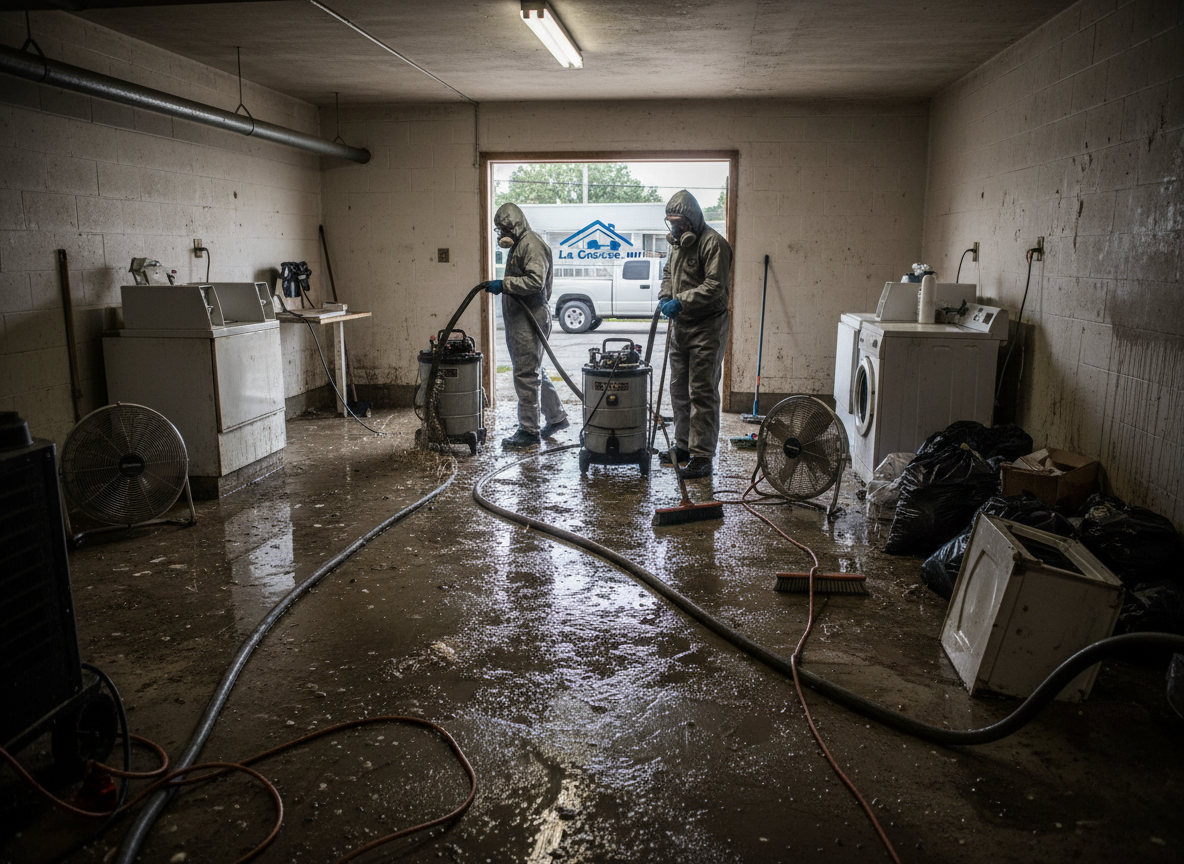
Older multifamily buildings in Downtown La Crosse and along the North Side often feature cast iron stacks and shared laterals installed before 1950. When these lines fail during spring thaws or after heavy summer rains, sewage can travel vertically through multiple floors and spread through HVAC returns. Crews start by mapping every unit connected to the affected stack, then isolate the zone with negative air and physical barriers to keep the rest of the building occupied.
Winter temperatures in La Crosse regularly drop below zero, freezing condensate lines and causing backups that surface in basements near Grandad Bluff and Riverside Park. In these cases the standing water mixes with road salt tracked in from tenants, raising the risk of corrosion on exposed subfloors. Technicians use heated extraction wands and apply EPA-registered antimicrobials rated for porous concrete before any drying equipment is placed.
La Crosse County requires that all extracted wastewater from multifamily jobs be hauled to the municipal treatment plant rather than discharged on site. Documentation of each load is provided to the property manager so the building stays in compliance with local health ordinances. Final clearance includes moisture readings in every affected unit plus air sampling for hydrogen sulfide before tenants are allowed back in.
Properties near the La Crosse Center and South Side apartments sit on clay-heavy soils that hold moisture longer after backups. This extends drying times and can push hidden contamination into wall cavities between units. Technicians open baseboards on both sides of shared walls and run dehumidifiers in tandem with air movers to pull moisture across the full assembly.
Technician insight
In La Crosse the thing that catches most people out with Apartment & Multifamily Sewage Backup Cleanup is how quickly cold winter air turns a simple basement backup into a multi-floor event. Older cast-iron stacks on the North Side contract and crack when temperatures stay below zero, sending sewage into units that share the same vent. Once it hits the clay soil under South Side buildings it stays wet for weeks unless you open the cavities between units.
North Side three-story backup after January freeze
A shared stack froze and cracked on the second floor of a North Side apartment building. Sewage reached three units and traveled through the return air duct. We isolated the stack, extracted from each unit, treated the concrete, and ran drying equipment for six days until readings cleared.
Apartment & Multifamily Sewage Backup Cleanup Services We Offer
✓Multi-Unit Sewage Extraction
Removes standing sewage from multiple apartments at once using truck-mounted systems sized for La Crosse buildings.
✓Shared Stack Line Isolation
Locates and plugs the common vertical stack so sewage does not migrate to unaffected floors during cleanup.
✓Apartment Odor Neutralization
Applies hydroxyl generators and sealants to eliminate sewage odors that travel through older plaster walls and shared vents.
✓Tenant Space Containment
Sets up floor-by-floor barriers so residents in unaffected units can remain in place while work continues.
✓Post-Backup Air Quality Testing
Measures hydrogen sulfide and moisture levels in every unit before re-occupancy is approved.
✓Basement Slab Cleaning
Treats concrete slabs common in South Side multifamily properties to remove embedded sewage residue.
Apartment & Multifamily Sewage Backup Cleanup Cost in La Crosse, WI
| Service | Typical Range | What Affects It |
|---|---|---|
| Single-unit extraction and cleaning | $900–$1,800 | Higher when sewage reaches subfloor or wall cavities |
| Two- to four-unit containment job | $2,200–$4,500 | Includes barriers and odor control across floors |
| Shared stack isolation add-on | $600–$1,200 | Required when backup originates above first floor |
| Post-cleanup air quality testing | $350–$650 | Per building; required for tenant re-entry |
Ranges are typical for La Crosse, WI and confirmed with an exact written quote before any work starts.
How it works
- 1
Site Mapping
Technicians inspect every unit tied to the affected line and note which laterals connect to the city sewer near Vine Street.
- 2
Containment Setup
Negative air machines and physical barriers seal the impacted floors from the rest of the building.
- 3
Extraction and Cleaning
Standing water is removed, surfaces are washed with antimicrobial solutions, and porous materials are removed where needed.
- 4
Drying and Verification
Equipment runs until moisture readings meet industry standards, followed by air sampling and final walkthrough.
Pricing
Cost depends on number of units, depth of contamination, and whether shared stacks require excavation.