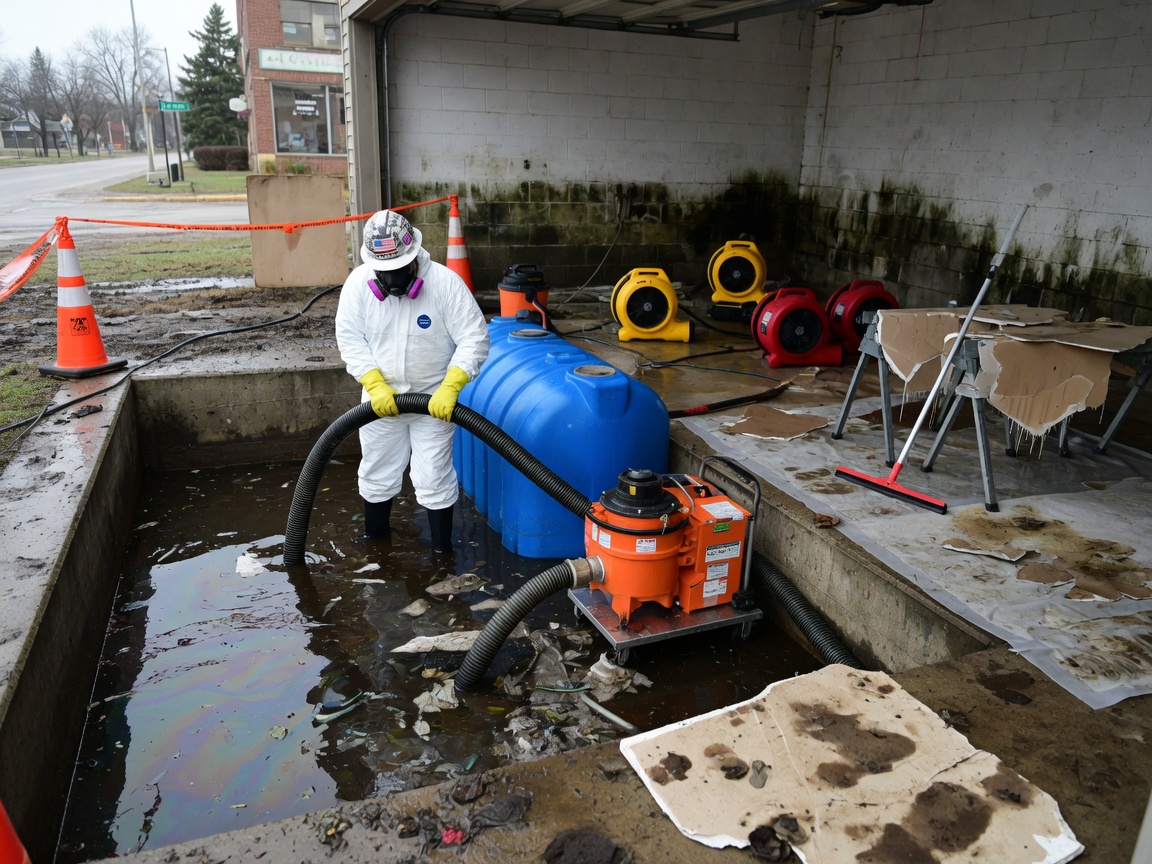
La Crosse homes built before 1960 in the North Side and Downtown often have clay tile or cast-iron drains that crack under the freeze-thaw cycles of a humid continental winter. When sewage backs up, water migrates under finished basements and into the voids around Grandad Bluff’s limestone foundations, where standard shop-vac methods leave hidden moisture that later fuels mold. Extraction crews must use truck-mounted units with 500-plus CFM airflow and negative-air containment to pull contaminated water without spreading aerosols through the connected Riverside Park neighborhood.
Warm summer storms drop several inches in hours on the South Side’s flatter terrain, overwhelming municipal lines near the La Crosse Center and sending effluent into crawl spaces. Porous limestone and older plaster walls absorb the liquid quickly, so crews cut weep holes and run commercial air movers for 72–96 hours while monitoring with moisture meters. Failure to reach sub-15% moisture content before closing walls violates standard restoration protocols and leaves homeowners dealing with recurring odors during the next cold snap.
Properties between La Crosse and Winona frequently see backups after heavy spring rains because the Mississippi floodplain raises the water table and pushes groundwater into private laterals. Extraction teams isolate affected zones with plastic sheeting, remove standing water in measured gallons, then apply EPA-registered disinfectants followed by HEPA drying. Homeowners who skip professional drying often discover warped hardwood floors months later when humidity spikes again in July.
Technician insight
In La Crosse the thing that catches most people out with Sewage-Contaminated Water Extraction & Drying is the clay soil on the North Side that holds winter freeze water against old foundation walls; once sewage enters those voids, homeowners who only run a dehumidifier for a weekend still end up with mold six months later when the ground thaws again.
North Side basement after January freeze
A 1928 home on the North Side lost a cast-iron cleanout during a hard freeze; sewage rose six inches across the finished basement. Crews isolated the space, extracted 340 gallons, cut wall cavities, and ran drying equipment for four days until readings stabilized. The homeowner avoided full floor replacement by catching the moisture before it reached the subfloor.
Sewage-Contaminated Water Extraction & Drying Services We Offer
✓Basement Sewage Extraction
Removes standing and trapped sewage water from La Crosse basements using high-volume pumps before hidden moisture damages joists or encourages mold behind older plaster.
✓Crawl Space Drying After Backup
Extracts contaminated water and installs drying equipment in South Side crawl spaces where clay soil and high water tables slow natural evaporation.
✓Carpet and Pad Removal
Cuts and disposes of saturated carpet and padding in Downtown apartments to stop bacteria from migrating into subfloors during humid summer conditions.
✓Hardwood Floor Moisture Removal
Uses targeted drying mats and dehumidifiers on North Side hardwood floors to pull sewage water from between boards without full replacement.
✓Wall Cavity Drying
Drills and dries cavities behind drywall in older La Crosse homes where sewage has wicked upward from floor level during winter freezes.
Sewage-Contaminated Water Extraction & Drying Cost in La Crosse, WI
| Service | Typical Range | What Affects It |
|---|---|---|
| Single-room basement extraction and drying | $900–$1,800 | Higher when finished walls require cavity drying |
| Whole-basement sewage extraction | $2,200–$4,500 | Depends on crawl-space access and material removal |
| Hardwood floor drying only | $600–$1,200 | Lower if no carpet or pad removal needed |
| Emergency after-hours response | $250–$450 | Added to base job for nights and weekends |
Ranges are typical for La Crosse, WI and confirmed with an exact written quote before any work starts.
How it works
- 1
Site Assessment
Technicians inspect the property, map water migration through basements near Grandad Bluff, and document affected materials before any extraction begins.
- 2
Containment Setup
Plastic barriers and negative air machines isolate the work zone to keep odors and particles from reaching the rest of the home or neighboring units.
- 3
Water Extraction
Truck-mounted equipment removes standing and absorbed sewage water from floors, walls, and crawl spaces while measuring volume removed.
- 4
Drying And Monitoring
Commercial air movers and dehumidifiers run until moisture readings drop below 15 percent, with daily checks to adjust equipment placement.
- 5
Final Sanitation
Disinfectants are applied to all contacted surfaces and the area is cleared for reconstruction once drying is verified.
Pricing
Pricing varies by water volume, number of affected rooms, and whether finished materials must be removed.