
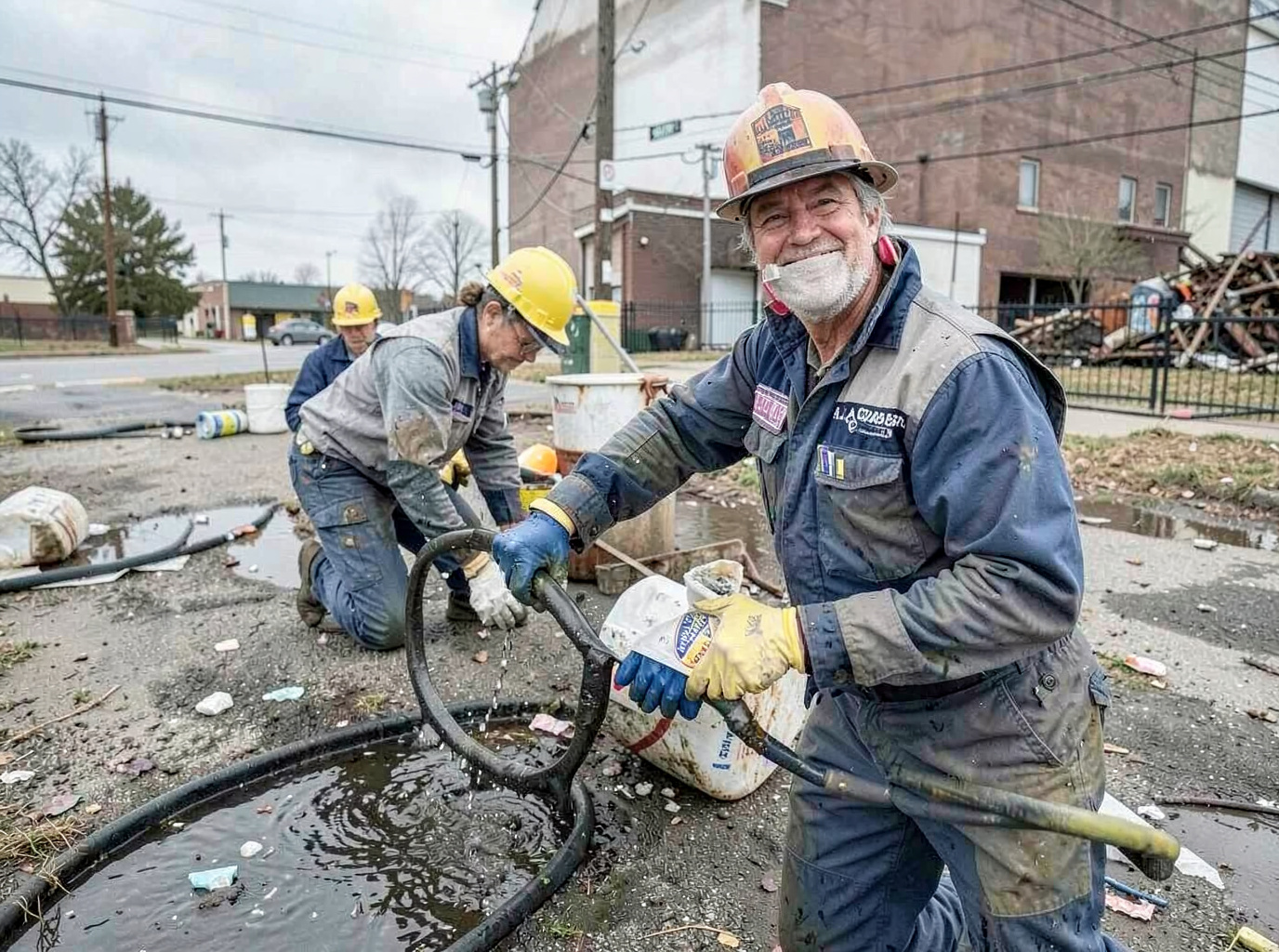
Commercial properties in Downtown La Crosse often sit on aging clay or cast-iron lines installed decades ago that crack under repeated freeze-thaw cycles common to the humid continental climate. When a main line fails, sewage can migrate into finished retail spaces or restaurant kitchens within minutes, carrying pathogens that require EPA-registered disinfectants and documented moisture mapping to satisfy health-department reopening standards. Crews at 333 Vine St keep portable extraction units and air movers staged for rapid response to the South Side industrial corridor where slab-on-grade construction hides leaks until odors reach customer areas.
Heavy summer rains combined with the flat terrain near Riverside Park and the La Crosse Center frequently overwhelm municipal storm lines, pushing effluent back through floor drains in multi-tenant buildings. Commercial jobs here routinely involve separating gray-water from black-water streams, removing saturated vinyl tile or carpet in high-traffic corridors, and running negative-air machines to protect adjacent suites still open for business. Winter backups from frozen roof drains or vent stacks add another layer: crews must work in unheated spaces while preventing secondary ice damage to electrical and HVAC systems.
Edge cases include grease-trap overflows in North Side food-service buildings where FOG accumulation combines with river-adjacent high water tables, forcing crews to excavate exterior cleanouts rather than rely on interior jetting alone. Documentation of every step, from pre-job photos to post-drying moisture readings, protects property managers when insurance adjusters question the extent of contamination versus normal wear in 1960s-era commercial stock.
Technician insight
In La Crosse the thing that catches most people out with Commercial Sewage Backup Cleanup is how quickly cold-weather pipe bursts in Downtown’s 1940s–1960s brick buildings send effluent under shared walls before anyone notices; the river-adjacent water table on the South Side then keeps sub-slabs wet for weeks if you skip exterior trenching.
Kitchen Backup Near Riverside Park
A North Side restaurant experienced repeated backups after heavy spring rain. Crews found a collapsed clay line under the prep floor that had allowed river-influenced groundwater to push sewage upward. Extraction, new cleanout installation, and full sanitization of tile and equipment allowed the kitchen to reopen within 48 hours without health-department violations.
Commercial Sewage Backup Cleanup Services We Offer
✓Restaurant Kitchen Sewage Overflow Cleanup
Rapid extraction and sanitization of grease-laden sewage that backs up through floor drains in La Crosse eateries, restoring food-prep surfaces to health-code compliance.
✓Retail Store Basement Flood Restoration
Removal of contaminated water from retail basements along the North Side and Downtown corridors, followed by drying and odor neutralization to reopen sales floors quickly.
✓Office Building Drain Backup Remediation
Targeted cleanup of sewage that enters finished office spaces near the La Crosse Center, including carpet and underlayment removal plus HVAC vent cleaning.
✓Hotel Guest Room Sewage Spill Extraction
Discrete extraction and room-by-room sanitization after toilet or tub backups in La Crosse lodging properties, minimizing guest displacement.
✓Warehouse Sump Pump Failure Response
Industrial-scale pumping and disinfection after sump failures in South Side warehouses where high groundwater meets older foundation drains.
Commercial Sewage Backup Cleanup Cost in La Crosse, WI
| Service | Typical Range | What Affects It |
|---|---|---|
| Small commercial suite cleanup | $1,200–$2,800 | Single room or 500 sq ft; price rises with carpet or tile removal |
| Restaurant kitchen overflow | $2,500–$5,500 | Includes grease-trap area and adjacent prep surfaces |
| Multi-tenant office floor | $3,800–$7,200 | Depends on HVAC involvement and number of suites affected |
| Warehouse sump failure | $4,500–$9,000 | Higher end when excavation or exterior cleanouts are required |
Ranges are typical for La Crosse, WI and confirmed with an exact written quote before any work starts.
How it works
- 1
Site Assessment and Containment
Technicians arrive from 333 Vine St, isolate the affected commercial zone, and map moisture migration using meters before any extraction begins.
- 2
Extraction and Removal
Truck-mounted and portable units pull standing sewage and saturated materials while maintaining negative pressure to protect neighboring tenant spaces.
- 3
Disinfection and Drying
EPA-registered agents treat all surfaces; industrial dehumidifiers and air movers run until moisture readings meet restoration standards.
- 4
Final Verification and Handover
Post-job documentation and walkthrough confirm the space meets local health requirements before the business resumes operations.
Pricing
Upfront quotes based on square footage, water volume, and access constraints; no hidden fees.