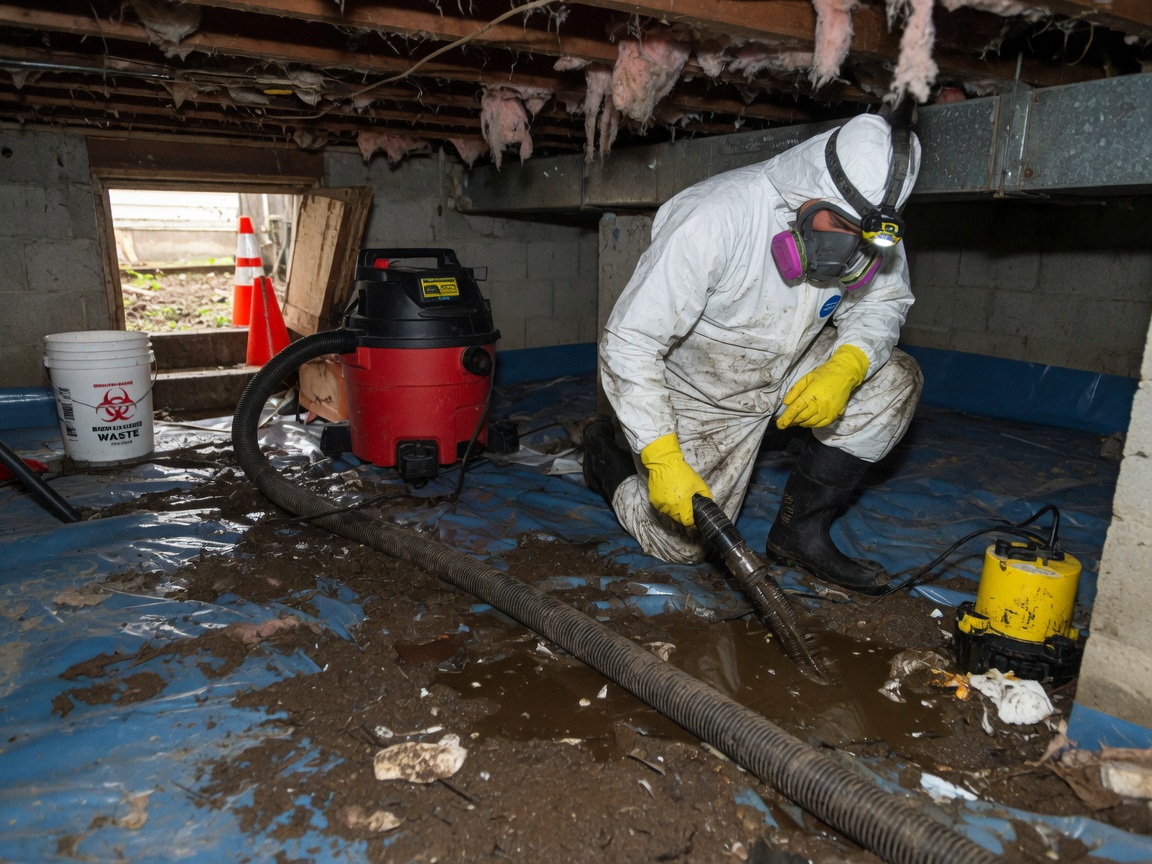
Crawl spaces in La Crosse homes, especially those on the North Side and South Side built before the 1960s, often sit low to the ground with limited access points and dirt floors that absorb sewage quickly. Once winter temperatures drop, standing water can freeze against joists and insulation, complicating removal and raising the risk of hidden contamination that only shows up when the ground thaws. Homes near Riverside Park and the La Crosse Center face additional pressure from higher water tables during heavy spring rains, so crews must check for backflow through floor drains before starting extraction.
After pumping out liquid waste, crews remove saturated insulation and any wood that shows staining, then apply antimicrobial treatments to joists and soil. In humid continental summers, residual moisture can climb back into living spaces above if dehumidification is skipped, so industrial air movers and moisture meters stay on site until readings drop below 12 percent. Older Downtown properties with stone foundations sometimes require temporary shoring when crews cut new access hatches to reach far corners without disturbing load-bearing walls.
La Crosse County rules require proper disposal of extracted material at approved facilities, and crews document volumes removed to keep homeowners compliant. Terrain around Grandad Bluff means some South Side crawl spaces slope toward the street, so gravity helps drainage but also funnels street runoff during storms. Technicians always test soil after cleanup because clay-heavy ground here holds odors longer than sandy soils found closer to Winona or Eau Claire.
Technician insight
In La Crosse, the thing that catches most people out with Crawl Space Sewage Cleanup is how quickly cold winter air freezes sewage against floor joists in North Side homes built before 1950, then melts and spreads again when the ground thaws in spring.
South Side Crawl Space Backup
A homeowner near Riverside Park reported sewage rising through floor vents after heavy rain. Crews found the crawl space half full with standing water that had reached the insulation. Extraction and soil treatment were completed in one day, followed by drying equipment left for five days until readings stabilized.
Crawl Space Sewage Cleanup Services We Offer
✓Crawl Space Sewage Extraction
Removes standing sewage and sludge from crawl spaces using pumps and vacuums sized for tight La Crosse access points.
✓Crawl Space Disinfection and Antimicrobial Treatment
Applies EPA-registered treatments to joists, soil, and remaining materials after extraction to stop bacterial regrowth.
✓Crawl Space Drying and Dehumidification
Sets up commercial drying equipment and monitors moisture levels until the space meets safe standards for the local climate.
✓Contaminated Insulation Removal
Cuts out and disposes of wet fiberglass or cellulose insulation that has absorbed sewage in older North Side and South Side homes.
✓Crawl Space Access and Entry Creation
Creates safe entry points in tight or sealed crawl spaces common in pre-1960 La Crosse housing stock.
✓Post-Cleanup Soil Treatment
Treats and stabilizes dirt floors after sewage removal to reduce odor retention in clay-heavy La Crosse soil.
Crawl Space Sewage Cleanup Cost in La Crosse, WI
| Service | Typical Range | What Affects It |
|---|---|---|
| Crawl Space Sewage Extraction | $900–$2,200 | Varies with volume and difficulty reaching corners in older North Side homes |
| Full Crawl Space Cleanup Package | $1,800–$4,000 | Includes extraction, treatment, drying, and insulation removal |
| Additional Drying Equipment Rental | $150–$350 per week | Required when summer humidity slows drying near the river |
| New Access Hatch Installation | $400–$750 | Needed on homes with sealed crawl spaces common downtown |
Ranges are typical for La Crosse, WI and confirmed with an exact written quote before any work starts.
How it works
- 1
Site Assessment
Technician inspects access, measures contamination extent, and checks for structural concerns in the specific La Crosse neighborhood.
- 2
Extraction
Pumps and vacuums remove all liquid and solid waste while containing runoff on sloped South Side lots.
- 3
Cleaning And Treatment
Removes affected materials, disinfects surfaces, and treats soil before drying begins.
- 4
Drying And Verification
Runs drying equipment and confirms moisture levels before final walkthrough with the homeowner.
Pricing
Upfront quotes after on-site inspection at 333 Vine St address or job site.