Older housing stock in La Crosse neighborhoods like the South Side and North Side often features original hardwood over plywood subfloors or carpet installed directly on concrete slabs in basements. When sewage backs up, water migrates under baseboards and into these layers, carrying contaminants that standard surface cleaning misses. Cold winters exacerbate the issue because frozen ground and snowmelt push additional pressure into aging sewer lines near Riverside Park and the La Crosse Center area.
In humid continental conditions, warm summer humidity slows drying and allows bacteria to remain active longer inside flooring materials. We extract standing water first, then use moisture meters to locate hidden saturation in carpet padding and hardwood. Homes near Grandad Bluff frequently sit on clay-heavy soils that retain moisture, so we cut and remove sections of affected flooring rather than attempting to dry through it.
La Crosse County properties built before 1970 commonly have cast-iron or clay sewer lines that crack under seasonal freeze-thaw cycles, sending effluent into living spaces. We separate salvageable materials from those requiring disposal, treat remaining surfaces with EPA-registered disinfectants, and document moisture readings for insurance purposes. This approach prevents lingering odors that travel between floors in two-story Downtown homes.
Technician insight
In La Crosse, the thing that catches most people out with Sewage-Contaminated Carpet & Flooring Cleanup is how quickly sewage travels under baseboards into the plywood subfloors of South Side homes built on clay soil. Once winter freeze-thaw cycles crack the old clay lines, the water sits longer and soaks deeper than surface water would.
North Side basement after line failure
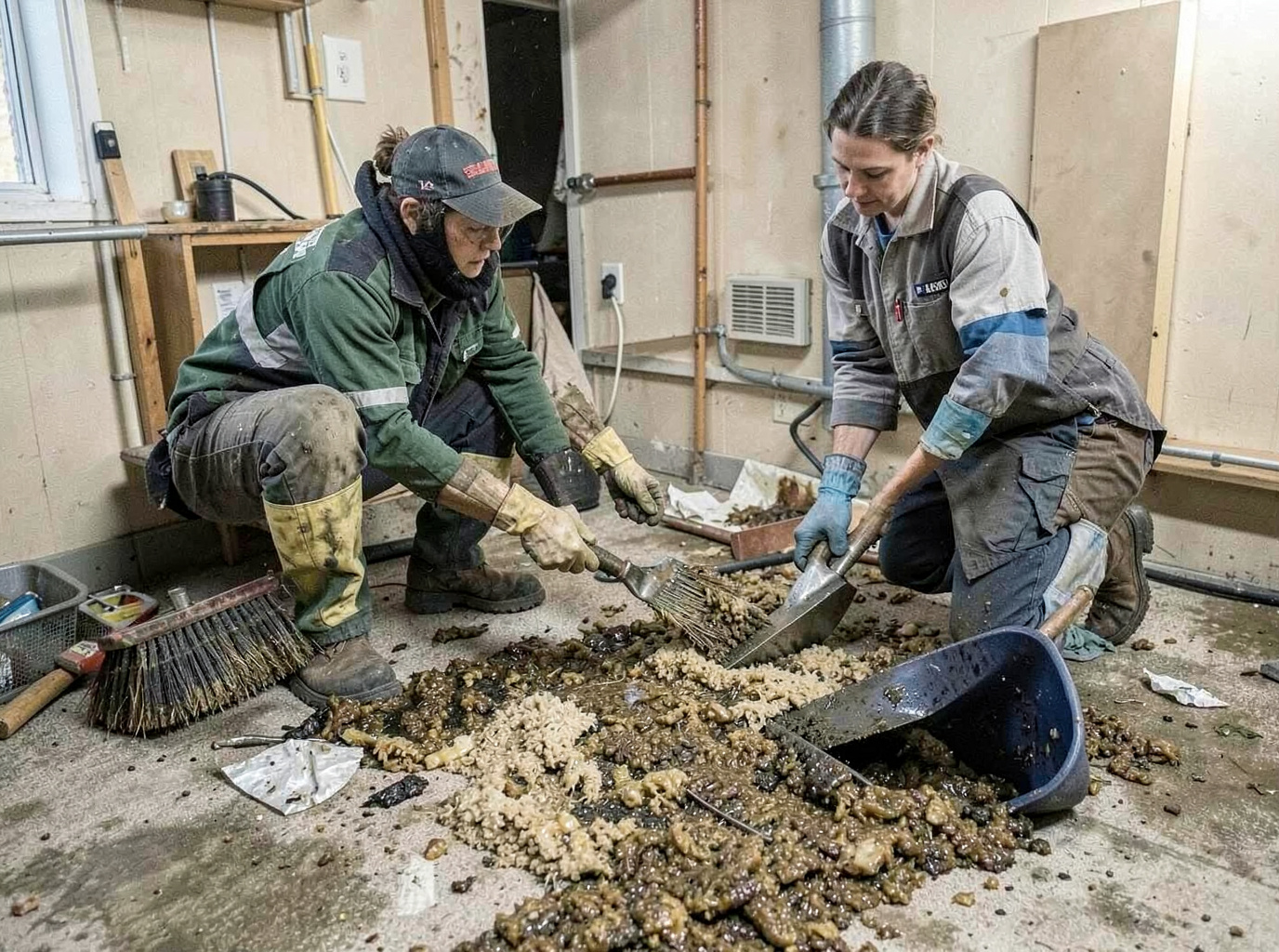
Sewage backed up through a cracked clay line into a 1940s North Side home during spring thaw. Water had wicked under carpet padding and into the particleboard subfloor beneath the laundry room. We extracted the water, removed the saturated carpet and subfloor sections, disinfected the concrete, and dried the remaining structure before reconstruction.
Sewage-Contaminated Carpet & Flooring Cleanup Services We Offer
✓Basement Carpet Extraction
Remove saturated padding and carpet from below-grade spaces, then disinfect concrete slabs common in North Side and South Side homes.
✓Hardwood Flooring Drying and Treatment
Assess cupping and delamination in older La Crosse hardwood, extract trapped moisture, and apply antimicrobial solutions to prevent warping.
✓Tile and Grout Sanitation
Clean and disinfect porous grout lines after sewage contact, targeting areas around La Crosse Center where commercial buildings meet older residential stock.
✓Subfloor Inspection and Removal
Cut out contaminated plywood or particleboard subfloors in homes near Riverside Park where repeated backups have soaked structural layers.
✓Odor Source Elimination
Locate and treat hidden sewage residue under flooring that causes persistent smells in warm summer months across La Crosse County.
Sewage-Contaminated Carpet & Flooring Cleanup Cost in La Crosse, WI
| Service | Typical Range | What Affects It |
|---|---|---|
| Carpet and padding removal per room | $250–$550 | Varies with room size and whether concrete slab or wood subfloor is present. |
| Hardwood section removal and treatment | $400–$900 | Higher when multiple boards have absorbed sewage near baseboards. |
| Tile grout cleaning and disinfection | $150–$350 | Depends on square footage and extent of contamination under tiles. |
| Subfloor cut-out and disposal | $300–$700 | Moves with thickness of plywood and access in older La Crosse basements. |
Ranges are typical for La Crosse, WI and confirmed with an exact written quote before any work starts.
How it works
- 1
Initial Contamination Assessment
We inspect affected rooms, test moisture levels in carpet, hardwood, and subfloors, and identify migration paths typical in La Crosse's older housing.
- 2
Water Extraction and Material Removal
Standing water is removed first, followed by cutting out saturated carpet, padding, and sections of flooring that cannot be salvaged.
- 3
Disinfection and Drying
EPA-registered disinfectants are applied to remaining surfaces, then commercial drying equipment is placed to handle La Crosse's variable humidity.
- 4
Final Verification
Moisture readings are rechecked and the space is cleared for reconstruction once all sewage residue has been addressed.
Pricing
Pricing depends on square footage affected, flooring type, and whether subfloor removal is required.